


7 résultats
Exporter les résultats sélectionnés
Sélectionner tous les résultats de la page

-
Notice détaillée
Titre :
Evaluating the effect of vesticular-arbuscular mycorrhizae on tomato plantgrowth and production
Titre alternatif :
Évaluation de l'effet des mycorhizes vésico-arbusculaires sur la croissance et la production de tomates
Intervenant principal :
Awadhpersad, VijantieEdition :
University of Suriname, Université des Antilles. Service commun de la documentation (2015-....), Institut national de la recherche agronomique (France). Centre de recherches des Antilles et de la Guyane, Caribbean Food Crops Society
Lieu :
Le Gosier
Date :
12 juillet 2016
Extrait de :
52e congrès annuel de la Société caribéenne des plantes alimentaires / 52nd annual meeting of the Caribbean food crops society (CFCS), du 10 au 16 juillet 2016
Type :
Vidéo - Colloque & conférence
Résumé :
Tomato is one of the most popular vegetables in the world. Therefore, for improvement in crop productivity in Suriname and most other countries, excessive application of pesticides and synthetic fertilizers is used. These result in gradual depletion of soil fertility and microbial diversity. Conventionally managed soils are found to exhibit a poorer micro flora and a lower biological activity then organically managed soils. Recently much attention is paid to organic cultivation and the use of bio fertilizers as a supplement for chemical fertilizers. VAM fungi have the potential to improve the sustainability of tomato production by improving yield and quality. Therefore, the aim of the study was to evaluate the effect of two different concentrations of commercially available vesicular - arbuscular mycorrhiza on the plant growth and fruit production of two tomato varieties (Lycopersicon esculentum Mill.) in the greenhouse.
Langue :
Espagnol, castillan
Mots-clés :
- - - -Conditions d'utilisation :
CC-BY-NC-ND - Attribution - Pas d'utilisation commerciale - Pas de modification
Provenance :


-
Notice détaillée
Titre :
Gestion des parasites gastro-intestinaux par des plantes ou utilisation de substances émétiques naturelles
Intervenant principal :
Melo, JorgeEdition :
Centre de coopération internationale en recherche agronomique pour le développement (France)
Lieu :
Martinique
Date :
05 décembre 2013
Extrait de :
« Projet DEVAG » : conférence, le 5 décembre 2013
Type :
Vidéo - Colloque & conférence
Résumé :
La communication s'articule autour de deux problématiques. D'abord la consommation de substances nocives pour les ovins que l'on tente de résoudre par l'utilisation de substances émétiques naturelles. Dans un second temps les infections intestinales qui touchent les ovins et que l'on tente également de résoudre par l'utilisation de substances naturelles.
Langue :
Espagnol, castillan
Mots-clés :
- - -Environnement (Ecosystèmes et biodiversité), santé
- - - - - - - -Conditions d'utilisation :
CC-BY-NC-ND - Attribution - Pas d'utilisation commerciale - Pas de modification
Provenance :

-
Notice détaillée
Titre :
Les ravageurs de cultures à Cuba : ennemis naturels et perspectives pour des systèmes de cultures agroécologiques
Intervenant principal :
Borges, MirthaEdition :
Centre de coopération internationale en recherche agronomique pour le développement (France)
Lieu :
Martinique
Date :
05 décembre 2013
Extrait de :
« Projet DEVAG » : conférence, le 5 décembre 2013
Type :
Vidéo - Colloque & conférence
Résumé :
Mirtha Borges récapitule les principaux bioagresseurs présents dans les cultures cubaines et leurs effets sur les cultures agroécologiques. Elle s'arrête sur les bioagresseurs s'attaquant aux cultures d'agrumes, de Goyave de papaye et d'avocat. Parmi eux, on dénombre la mouche blanche, des vers, ainsi que des punaises et coccinelles.
Langue :
Espagnol, castillan
Mots-clés :
- - -Environnement (Ecosystèmes et biodiversité), santé
- - - - - -Conditions d'utilisation :
CC-BY-NC-ND - Attribution - Pas d'utilisation commerciale - Pas de modification
Provenance :
-
Notice détaillée
Titre :
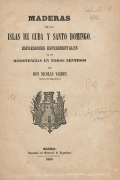
Maderas de las islas de Cuba y Santo Domingo : espresiones esperimentales de sus resistencias en todos sentidos
Auteur :
Valdés, Nicolás (1819-1872)Edition :
Imprementa del Memorial de Ingenieros
Lieu :
Madrid
Date :
1866
Type :
Livre
Langue :
Espagnol, castillan
Conditions d'utilisation :
Domaine public
Provenance :

-
Notice détaillée
Titre :
Methodology of participatory plant breeding (PPB) in Cuba
Intervenant principal :
Martinez Cruz, MichelEdition :
Université des Antilles. Service commun de la documentation (2015-....), Institut national des sciences agronomiques (Cuba), Institut national de la recherche agronomique (France). Centre de recherches des Antilles et de la Guyane, Caribbean Food Crops Society
Lieu :
Le Gosier
Date :
12 juillet 2016
Extrait de :
52e congrès annuel de la Société caribéenne des plantes alimentaires / 52nd annual meeting of the Caribbean food crops society (CFCS), du 10 au 16 juillet 2016
Type :
Vidéo - Colloque & conférence
Résumé :
The methodology is supported on the basis of the experience gained by a group of researchers, farmers and technicians from Cuba in the implementation of participatory plant breeding. Its implementation is a learning process in action for all the actors involved; it also makes it possible to understand the scale of producers' needs and programs for the selection and dissemination of varieties in terms of real interest. The methodology comprises 4 main phases: 1) diagnosis, 2) collection of plant genetic resources, 3) establishment of demonstration plots and fairs on development diversity and 4) peasant experimentation. In addition to these steps, other tools allowed the PPB to build a successful process were used: learning by doing as an interest, building student capacity on the stage in local innovation, and creating local seed banks., La méthodologie est soutenue sur la base de l’expérience acquise par un groupe de chercheurs, agriculteurs et techniciens de Cuba dans la mise en œuvre de la sélection végétale participative. Sa mise en œuvre est un processus d’apprentissage en action pour tous les acteurs impliqués; il permet également de comprendre l’échelle des besoins des producteurs et des programmes de sélection et de diffusion des variétés en termes d’intérêt réel. La méthodologie comporte 4 phases principales : 1) le diagnostic, 2) la collecte des ressources phytogénétiques, 3) la mise en place de parcelles de démonstration et de foires sur la diversité du développement et 4) l’expérimentation paysanne. Outre ces étapes, d’autres outils ont permis à la PPB de constituer un processus réussi ont été utilisés: apprentissage par l’action comme intérêt, renforcement des capacités des étudiants sur scène dans l’innovation locale et la création de banques de semences locales.
Langue :
Espagnol, castillan
Mots-clés :
- - - -Conditions d'utilisation :
CC-BY-NC-ND - Attribution - Pas d'utilisation commerciale - Pas de modification
Provenance :

-
Notice détaillée
Titre :
Projet DEVAG : Questions et débats 01
Edition :
Centre de coopération internationale en recherche agronomique pour le développement (France)
Lieu :
Martinique
Date :
05 décembre 2013
Extrait de :
« Projet DEVAG » : conférence, le 5 décembre 2013
Type :
Vidéo - Colloque & conférence
Résumé :
Cette première tranche de débat se concentre sur l'amélioration génétique et la résistance variétale en réponse aux maladies bactériennes.
Langue :
Espagnol, castillan
Mots-clés :
- -Environnement (Ecosystèmes et biodiversité), santé
- - - - -Conditions d'utilisation :
CC-BY-NC-ND - Attribution - Pas d'utilisation commerciale - Pas de modification
Provenance :

-
Notice détaillée
Titre :
Quelles plantes de services pour réduire l'impact de la mouche blanche sur tomate à Cuba ?
Intervenant principal :
Fernandez Delgado, Jany (19..-....)Edition :
Centre de coopération internationale en recherche agronomique pour le développement (France)
Lieu :
Martinique
Date :
05 décembre 2013
Extrait de :
« Projet DEVAG » : conférence, le 5 décembre 2013
Type :
Vidéo - Colloque & conférence
Résumé :
Jany Fernadez présente la mouche blanche comme un des principaux obstacles à la production de tomates dans le monde. Elle énumère les variétés de mouche et les biotypes présents à Cuba. Il existe environs six virus transmis par la mouche blanche à Cuba. Le plus connu est celui du flétrissement de la feuille jaune de la feuille de tomate. Afin de réduire l'impact des virus, trois espèces de plantes aromatiques ont été utilisées : le basilic, l'orican français et le thym.
Langue :
Espagnol, castillan
Mots-clés :
- -Environnement (Ecosystèmes et biodiversité), santé
- - - - - - - - -Conditions d'utilisation :
CC-BY-NC-ND - Attribution - Pas d'utilisation commerciale - Pas de modification
Provenance :
