


Filtrer par

50 résultats
Exporter les résultats sélectionnés
Sélectionner tous les résultats de la page
-
Notice détaillée
Titre :
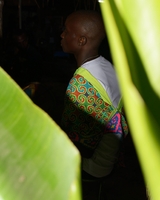
A Saramaka musician (member of Soeti Amini group) plays Kawina music at the opening of the Arts and Research Center, Carma, Mana, French Guiana.
Auteur :
Lo Calzo, Nicola (1979-....)Lieu de la prise de vue :
Guyane Française
Extrait de :
Cham, la mémoire vivante
Type :
Photographie - Couleur
Description :
The folklorisation trend of the culture is an inevitable process for Maroon city dwellers. Music or dance often represent rare job opportunities for young Bushinengue. While still maintaining its playful aspect, these performances are void of ritual significance.
Conditions d'utilisation :
CC-BY-NC-ND - Attribution - Pas d'utilisation commerciale - Pas de modification
Provenance :

-
Notice détaillée
Titre :
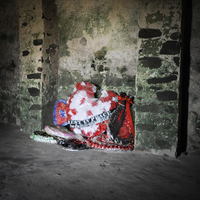
A bunch of flowers offered by the passengers of the Ship Prince Albert II of the Silversea Cruises Company in a room of the Elmina Castle.
Auteur :
Lo Calzo, Nicola (1979-....)Lieu de la prise de vue :
Ghana
Extrait de :
Cham, la mémoire vivante
Type :
Photographie - Couleur
Description :
Several travel agencies based in West Africa and in the United States offer numerous slavery heritage tours. Generally, the length of these trips can vary between eight and twenty days. «Spector Travel, a travel agency based in Boston and specializing in African roots tours, offers packages for Benin, Ghana, Senegal, and The Gambia. Elmina, Ghana
Conditions d'utilisation :
CC-BY-NC-ND - Attribution - Pas d'utilisation commerciale - Pas de modification
Provenance :
-
Notice détaillée
Titre :
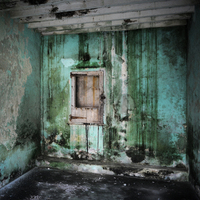
A detention cell for reluctant slaves, according to Philip Atta-Tawson’s story, Fort William, Anomabu.
Auteur :
Lo Calzo, Nicola (1979-....)Lieu de la prise de vue :
Ghana
Extrait de :
Cham, la mémoire vivante
Type :
Photographie - Couleur
Description :
Philip Atta-Tawson is today the keeper of the place where he lives with his family. In most castles of Ghana, there is a family living and working as a custodian on behalf of the government. An estimated half million of captives were sent from Anomabu to the Americas, among which 30 000 to the French West Indies. In the past, the fort was then used as a jail, then a post office, until it became a national registered site. Anomabu, Ghana
Conditions d'utilisation :
CC-BY-NC-ND - Attribution - Pas d'utilisation commerciale - Pas de modification
Provenance :
-
Notice détaillée
Titre :
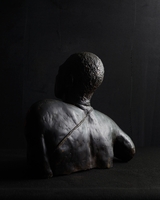
A slave, in bronze, anonymous, from the 19th. Century. Alexandre-Franconie Departemental Museum, Cayenne, French Guiana.
Auteur :
Lo Calzo, Nicola (1979-....)Lieu de la prise de vue :
Guyane Française
Extrait de :
Cham, la mémoire vivante
Type :
Photographie - Couleur
Conditions d'utilisation :
CC-BY-NC-ND - Attribution - Pas d'utilisation commerciale - Pas de modification
Provenance :

-
Notice détaillée
Titre :
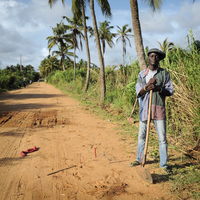
Aboikonie family members dance and celebrate their dead chief on a village canoe.
Auteur :
Lo Calzo, Nicola (1979-....)Lieu de la prise de vue :
Suriname
Extrait de :
Cham, la mémoire vivante
Type :
Photographie - Couleur
Description :
During these performances, the canoe makes several turns rotating around itself. As a part of the ritual, this is a way to represent the hesitations of the deceased’s soul, wandering between the worlds of the living and the dead. The Booko-de ceremony (two days before the burial ). Asindopo, Saramaka territory, Surinam.
Conditions d'utilisation :
CC-BY-NC-ND - Attribution - Pas d'utilisation commerciale - Pas de modification
Provenance :
-
Notice détaillée
Titre :
Ahi, doing some repairs on the “Slaves’ Route”.
Auteur :
Lo Calzo, Nicola (1979-....)Lieu de la prise de vue :
Bénin
Extrait de :
Cham, la mémoire vivante
Type :
Photographie - Couleur
Description :
The Slaves’ Route is a two-miles road starting in downtown Ouidah, close to a former slave market, and ending at the beach, where the captives were allegedly put on pirogues that brought them to the slave ships. In fact, because the coastal lagoon separated the town from the shore, it is more likely that the captives covered part of the way to the outer shore by canoe. Despite the relative success of the Slaves’ Route, only the local population living in the neighbourhoods is sufficiently audacious to walk along the road. The two-miles road is long and because the traffic is intense and there is no allotted space for pedestrians, it is rather difficult to safely observe the monuments. Indeed, individual tourists experience the Slaves’ Route by zemidjan (local motorcycle taxis). If with groups, they see the route by car or bus, and stop only at the end of the road, at the beach. Ouidah, Benin
Conditions d'utilisation :
CC-BY-NC-ND - Attribution - Pas d'utilisation commerciale - Pas de modification
Provenance :

-
Notice détaillée
Titre :
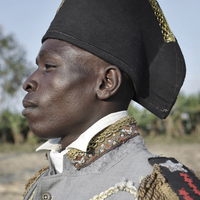
Albert Aboikonie’s speech, (Belfon Aboikonie’s successor), in front of dignitaries and government officials, Booko-de, or the burial vigil, Asindopo, Surinam.
Auteur :
Lo Calzo, Nicola (1979-....)Lieu de la prise de vue :
Suriname
Extrait de :
Cham, la mémoire vivante
Type :
Photographie - Couleur
Conditions d'utilisation :
CC-BY-NC-ND - Attribution - Pas d'utilisation commerciale - Pas de modification
Provenance :
-
Notice détaillée
Titre :
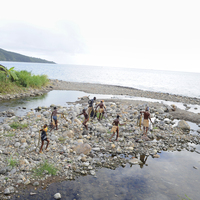
Altesse, Ferronnier, alias «Toussaint Louverture», membre du «Mouvement pour la Réussite de l’image des Héros de l’Indépendance». Photographie prise à la Croix-des-Bouquets, 2013.
Auteur :
Lo Calzo, Nicola (1979-....)Lieu de la prise de vue :
Port-au-Prince
Date :
2013
Extrait de :
Cham, la mémoire vivante
Type :
Photographie - Couleur
Conditions d'utilisation :
CC-BY-NC-ND - Attribution - Pas d'utilisation commerciale - Pas de modification
Provenance :
-
Notice détaillée
Titre :
Basse Terre
Auteur :
Lo Calzo, Nicola (1979-....)Lieu de la prise de vue :
Basse-Terre
Extrait de :
Cham, la mémoire vivante
Type :
Photographie - Couleur
Description :
The members of the group reach the sea to bathe and liberate themselves from the mas. In the group’s symbolism, the bathing in the sea or river concludes the “charge” on «Mardi Gras», the last day of the Carnival in the catholic calendar. It is an emblematic moment that allows the members firstly to purge themselves from the “mas” to reclaim their individual identity, and secondly, to be reconciled with the “treacherous” sea and to reaffirm their relationship to the island’s history: the place of the bathing is just beneath the Fort Delgrès, a hotbed of the resistance to slavery.
Conditions d'utilisation :
CC-BY-NC-ND - Attribution - Pas d'utilisation commerciale - Pas de modification
Provenance :

-
Notice détaillée
Titre :
Bettye Jenkins, Hawthorne House, Natchez Mississippi.
Auteur :
Lo Calzo, Nicola (1979-....)Lieu de la prise de vue :
Natchez
Extrait de :
Cham, la mémoire vivante
Type :
Photographie - Couleur
Description :
My parents bought this house in 1930. It was built in 1840. They got it in really bad condition and my family restored it. This was not really a plantation; it was a Spanish land ground of sixty-six acres. The plantation was some miles away from here. This house was a urban home. My husband’s family were cotton planters, they were some of the early settlers here. My family came from Virginia in the early 1800’s and moved to Natchez in 1938. My mother gave me this house and gave me this tradition of pilgrimage. I’m a member of the Pilgrimage Garden Club and my mother was one of its founding figures. Bettye Jenkins
Conditions d'utilisation :
CC-BY-NC-ND - Attribution - Pas d'utilisation commerciale - Pas de modification
Provenance :
